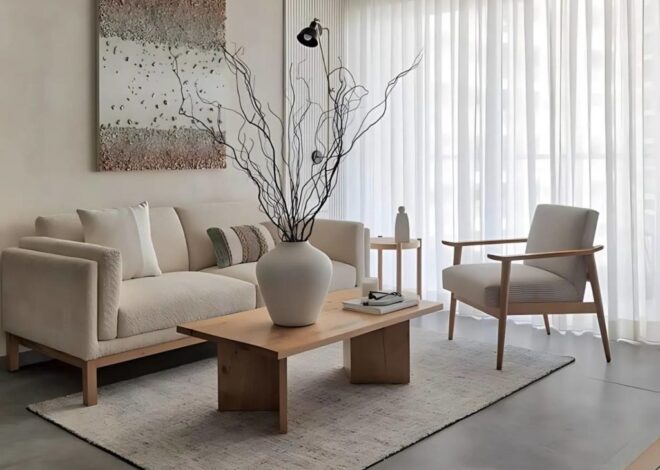
The Impact of Upholstered Furniture on Room Acoustics
Introduction to Spatial Sound Dynamics
Sound quality inside a room dramatically affects our comfort, focus, and overall experience. Whether trying to enjoy dialogue in a movie, hold a conversation over dinner, or concentrate in a home office, the acoustic environment plays a starring role. Hard architectural surfaces like glass windows, hardwood floors, and bare drywall reflect sound waves, creating echoes and a harsh, loud environment. Enter upholstered furniture. Far beyond mere comfort and visual style, sofas, armchairs, and ottomans serve as powerful acoustic tools that shape how sound behaves within an interior space. Understanding this dynamic allows homeowners and designers to craft spaces that look stunning while sounding peaceful and balanced.
Understanding the Science of Sound Reflection and Absorption
When a sound wave is produced, it travels outward until it strikes a surface. Hard, non-porous surfaces cause the sound wave to bounce back into the room with minimal energy loss. This phenomenon is known as sound reflection. When multiple reflections bounce around a room rapidly, it creates reverberation or echo, muddying speech and making a space feel loud, chaotic, and exhausting to inhabit.
Soft materials do the exact opposite. Upholstered furniture features porous materials that trap sound energy, converting it into tiny amounts of heat through friction as air molecules move through the fabric and foam. By interrupting the path of sound waves, soft furnishings reduce the overall energy of reflections, effectively quieting the room.
How Upholstered Pieces Act as Acoustic Treatment
Professional recording studios use specialized acoustic panels made of dense foam wrapped in fabric to control sound. Surprisingly, residential upholstered furniture functions on the exact same physical principle.
-
High-Density Foam Core: A plush sofa or deep armchair contains thick layers of high-density polyurethane foam, which is naturally suited for trapping mid-to-high frequency sound waves.
-
Polyester Batting: Layers of soft batting beneath the fabric add another porous barrier that diffuses sound energy rather than letting it bounce straight back into the room.
-
Complex Geometry: The curved shapes, cushions, and irregular angles of upholstered furniture help scatter sound waves in multiple directions, breaking up directional flutter echoes.
While a residential sofa cannot replace a commercial bass trap designed for low frequencies, it excels at soaking up the high-frequency reflections that cause harshness and ringing in a room.
Strategic Placement for Optimal Sound Quality
Placement matters significantly when harnessing furniture for acoustic control. Merely filling a room with furniture is not enough; positioning pieces where sound reflections concentrate makes all the difference.
In a home theater or living room, placing a large sectional sofa opposite a media wall or a bank of windows helps break up parallel reflective surfaces, preventing sound from bouncing back and forth endlessly. Placing armchairs in corners—which naturally trap and amplify bass frequencies—helps diffuse low-end buildup. In open-plan workspaces or large loft apartments, high-backed upholstered booths or modular lounge seating act as acoustic screens, dampening ambient chatter and creating pockets of conversational privacy without the need for permanent drywall partitions.
Fabric Selection and Its Acoustic Properties
Not all upholstery fabrics perform equally when it comes to sound absorption. The weave, density, and thickness of the textile dictate its acoustic coefficient.
Heavy, textured fabrics capture sound waves far more efficiently than tightly woven flat linens, sleek leathers, or performance vinyls. While leather looks luxurious, it acts more like a hard reflective surface because its pores are sealed. Choosing textiles with dense, open structures creates an effective acoustic trap.
-
Velvet: Features a dense pile that excels at diffusing and absorbing high-frequency sound waves.
-
Chenille: Offers a soft, textured surface that traps air pockets and dampens ambient noise.
-
Tweed and Heavy Wool Blends: Natural fibers with complex weaves provide exceptional sound absorption compared to synthetic smooth alternatives.
-
Performance Synthetics: While durable and stain-resistant, very slick synthetic weaves require backing materials to achieve meaningful acoustic dampening.
Resolving Common Acoustic Flaws
Rooms with minimalist decor frequently suffer from specific acoustic ailments that impact daily life. Flutter echoes occur when sound bounces back and forth between two parallel hard walls, creating a metallic ringing sound when someone claps or speaks loudly. Introducing an armchair or a plush ottoman near these reflection points breaks the path of the sound wave immediately.
Furthermore, high reverberation times reduce speech intelligibility, forcing people to raise their voices, which escalates overall room noise through a phenomenon known as the Lombard effect. Adding soft seating brings the reverberation time down to comfortable levels, restoring clarity to conversation and making large open spaces feel intimate and quiet.
Frequently Asked Questions
Does the color or pattern of an upholstery fabric affect its sound-absorbing performance?
Color and pattern are purely visual attributes and have no physical impact on how a fabric absorbs or reflects sound waves. Acoustic performance is strictly determined by fiber density, fabric thickness, and weave porosity rather than visual aesthetics.
How do interior throw pillows and blankets contribute to overall room acoustics?
Throw pillows and blankets add supplementary layers of porous soft material to seating arrangements. While their individual impact is minor, a collection of textured pillows and heavy knit blankets helps further scatter high-frequency sounds and reduce localized reflections.
Can outdoor upholstered furniture perform similarly to indoor pieces acoustically?
Outdoor upholstered furniture often uses closed-cell foams and water-repellent or laminated fabrics designed to shed moisture. Because these materials are engineered to block liquid penetration, they are typically less porous than indoor fabrics, resulting in significantly lower sound absorption capabilities.
What impact does the underlying frame material have on a sofa’s acoustic properties?
The internal frame—whether constructed from kiln-dried hardwood, engineered plywood, or tubular steel—primarily provides structural support. However, heavy wood frames add mass to the furniture piece, which helps slightly with low-frequency boundary absorption compared to hollow metal or lightweight plastic frames.
Does the placement of an area rug underneath upholstered furniture amplify its acoustic benefits?
Placing a thick area rug underneath upholstered furniture creates a cumulative acoustic effect. The rug absorbs floor reflections while the sofa absorbs wall and mid-air reflections, working together to drastically lower the total reverberation time of the room.
How does room humidity influence the sound-absorbing efficiency of fabric upholstery?
High humidity levels can cause natural textile fibers like wool and cotton to absorb moisture from the air slightly, which can marginally alter their porosity and stiffness, though the acoustic difference in a typical indoor residential environment is generally negligible.
Can vintage or antique upholstered furniture provide better acoustic treatment than modern pieces?
Older furniture pieces often utilized denser natural stuffing materials like horsehair, heavy cotton batting, and thick wooden frames, which can sometimes provide superior mass and density compared to lightweight modern foam alternatives.