How to Choose the Right Outdoor Play Equipment for Your Children’s Ages and Stages
Every parent has experienced the slow creep of backyard equipment obsolescence. The toddler slide that was thrilling at three becomes an afterthought at seven. The basic swing set that worked for younger children suddenly feels underwhelming once they start pushing each other to go higher, faster, and further. Choosing backyard play equipment isn’t just about what looks good in the catalogue — it’s about matching the right equipment to where your children are right now, while building in enough challenge to grow with them.
Here’s a practical guide to the equipment categories worth considering, and how to think about each one for different ages and family setups.
Jungle gyms: the all-in-one solution for mixed-age families
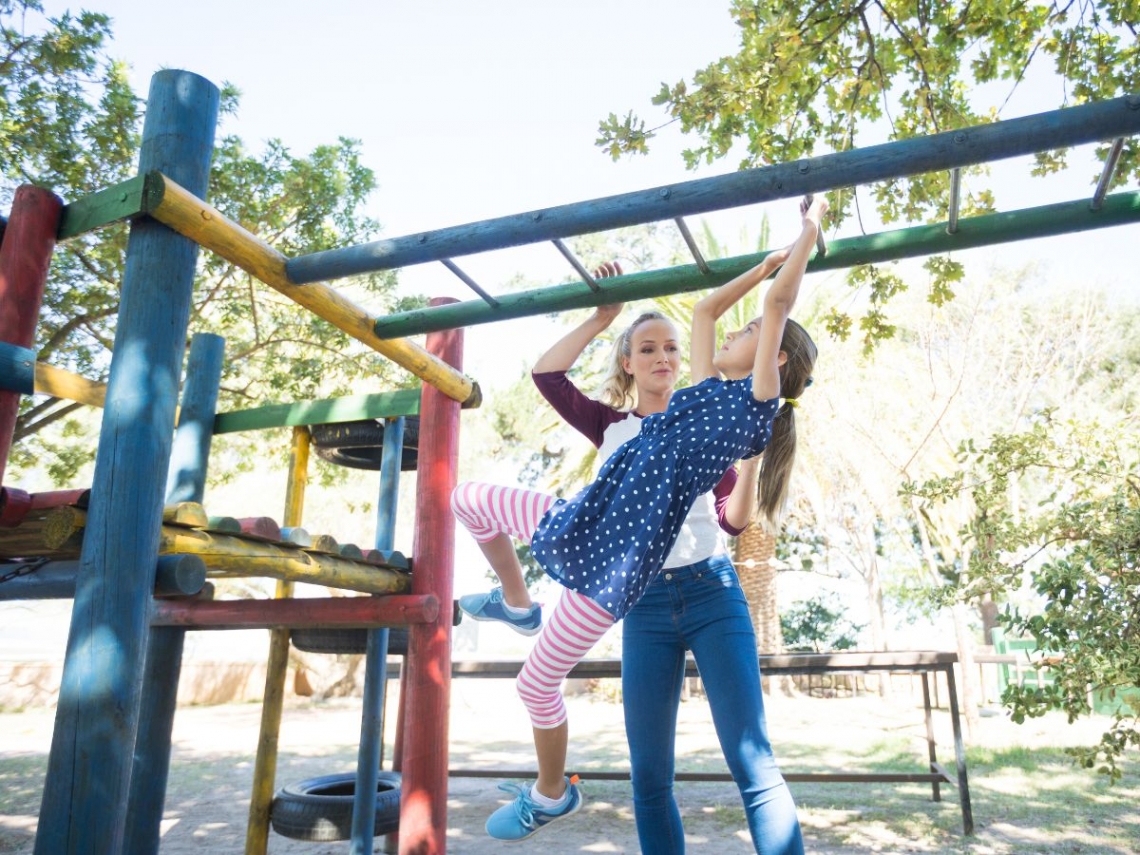
For families with children across a range of ages, jungle gyms are often the most practical single investment available. A well-configured jungle gym combines multiple play elements — climbing walls, platforms, slides, rope ladders, and bars — into one connected structure that different children can use simultaneously without getting in each other’s way.
The developmental case for jungle gyms is strong. The variety of movements required — pulling, pushing, climbing, balancing, and descending — works across the full spectrum of gross motor skills. Children who use multi-element structures regularly tend to develop better spatial awareness and physical confidence than those restricted to single-activity equipment.
From a yard management perspective, a jungle gym also consolidates your footprint. Rather than scattering individual pieces of equipment across the yard, a combined structure keeps the play zone defined, makes supervision easier, and typically leaves more open lawn space for unstructured running and ball games.
When evaluating jungle gyms, look closely at the weight ratings for each element, the height of the tallest platform, and what softfall surface is recommended beneath it. Australian standards for residential play equipment provide useful benchmarks even when equipment is purchased for private use.
Swings: deceptively simple, enduringly popular
It’s easy to underestimate how much use a good set of swings gets relative to almost any other piece of backyard equipment. Swings are one of the few activities that work across virtually every age group — from toddlers in a cradle seat who are experiencing movement and spatial sensation for the first time, to teenagers who will still swing for surprisingly long stretches when they think nobody’s watching.
The rhythmic, repetitive motion of swinging has well-documented calming effects on the nervous system, which is part of why children who are overstimulated or overwhelmed often naturally gravitate to a swing. Occupational therapists frequently recommend swing time for children with sensory processing differences for exactly this reason.
When choosing swings, variety matters. A mix of a standard belt swing, a nest or platform swing, and a gym ring or trapeze bar gives children of different ages and ability levels something suited to them on the same frame. It also dramatically increases the number of children who can use the structure at once, which reduces conflict and keeps the equipment in use for longer stretches.
Gymnastics bars for strength, skill, and focused practice
Gymnastics bars tend to appeal to a specific type of child — one who wants to practise something, to refine a skill through repetition, to feel the satisfaction of a movement executed cleanly. If that description fits one of your children, a good set of gymnastics bars is one of the highest-value additions you can make to a backyard setup.
The physical benefits are considerable. Bar work develops upper body and core strength at a rate that most other backyard activities can’t match. Children who train on bars regularly develop exceptional grip strength, shoulder stability, and body control — attributes that translate directly into performance in other sports and physical activities.
For children enrolled in gymnastics classes, a home bar setup accelerates skill development significantly. Coaches consistently report that students who practise between sessions progress faster and retain skills more reliably than those who only train once or twice a week. For parents, the maths often works out — a quality adjustable bar costs a fraction of additional private coaching sessions.
Adjustable height is the most important feature to look for. A bar that can be raised incrementally as a child grows ensures the equipment remains appropriately challenging rather than becoming too easy as strength and confidence develop.
Swing sets: the structured frame that holds it all together
While individual swings and jungle gyms each have their place, a purpose-built swing set frame offers something distinct: a dedicated, stable structure engineered specifically around swinging as the primary activity, often with room to expand or attach additional elements over time.
Quality swing set frames are typically built to handle higher loads and more dynamic movement than multipurpose jungle gym structures, which makes them the right choice for families with older or heavier children, or for yards where swinging will clearly be the dominant activity.
The best swing set frames are also modular. Starting with a two-bay configuration and adding a third bay, a glider, or a rock-climbing attachment as your family’s needs evolve is far more cost-effective than replacing equipment entirely. Look for frames with bolt-together construction and standardised fittings that make future additions straightforward.
Positioning is worth thinking through carefully. Swing sets require a clear safety zone in front of and behind each swing — generally at least two metres in both directions from the outermost point of the swing arc. Mapping this out before installation saves the frustration of discovering the frame is too close to a fence or garden bed once it’s already anchored.
Putting the pieces together
The most effective backyard play spaces are rarely the result of buying everything at once. They grow over time — a jungle gym or swing set as the foundation, swings configured for the children’s current ages, gymnastics bars added when a child develops a specific interest. Each addition builds on what’s already there, creating a space with genuine depth and variety.
The common thread in the setups that get used most consistently is that someone thought carefully about the children who’d be using them. Age-appropriate challenge, variety across different types of movement, and equipment built to handle Australian conditions — these are the details that separate a play space that transforms a backyard from one that collects dust.